The Athlete's Guide to Recovery Sleep
Share
Athletes will track every rep, every meal and every mile. Yet the most powerful recovery tool is free, and most people ignore it: sleep. Here's the recovery sleep playbook, whether you train for a living or just want to feel sharper every day.
Training is the stimulus. Sleep is where you get better.
Workouts put your body under stress. The actual rebuilding happens later, and a lot of it happens while you sleep. Deep sleep is when your body does much of its physical repair, and a full night supports your energy, reaction time, focus and mood the next day.
Cut sleep short and you don't just feel tired. Workouts feel harder, motivation drops and progress slows down.
How much is enough?
Most sleep experts recommend at least 7 hours a night for adults. Many athletes and very active people feel best with more, especially during heavy training blocks. The best guide is how you feel: if you need an alarm every day and caffeine to get going, you probably need more.
The recovery sleep playbook
1. Keep a consistent schedule
Going to bed and waking up at the same time every day, weekends included, is one of the strongest ways to steady your internal clock. Consistency often matters as much as total hours.
2. Make your room dark, cool and quiet
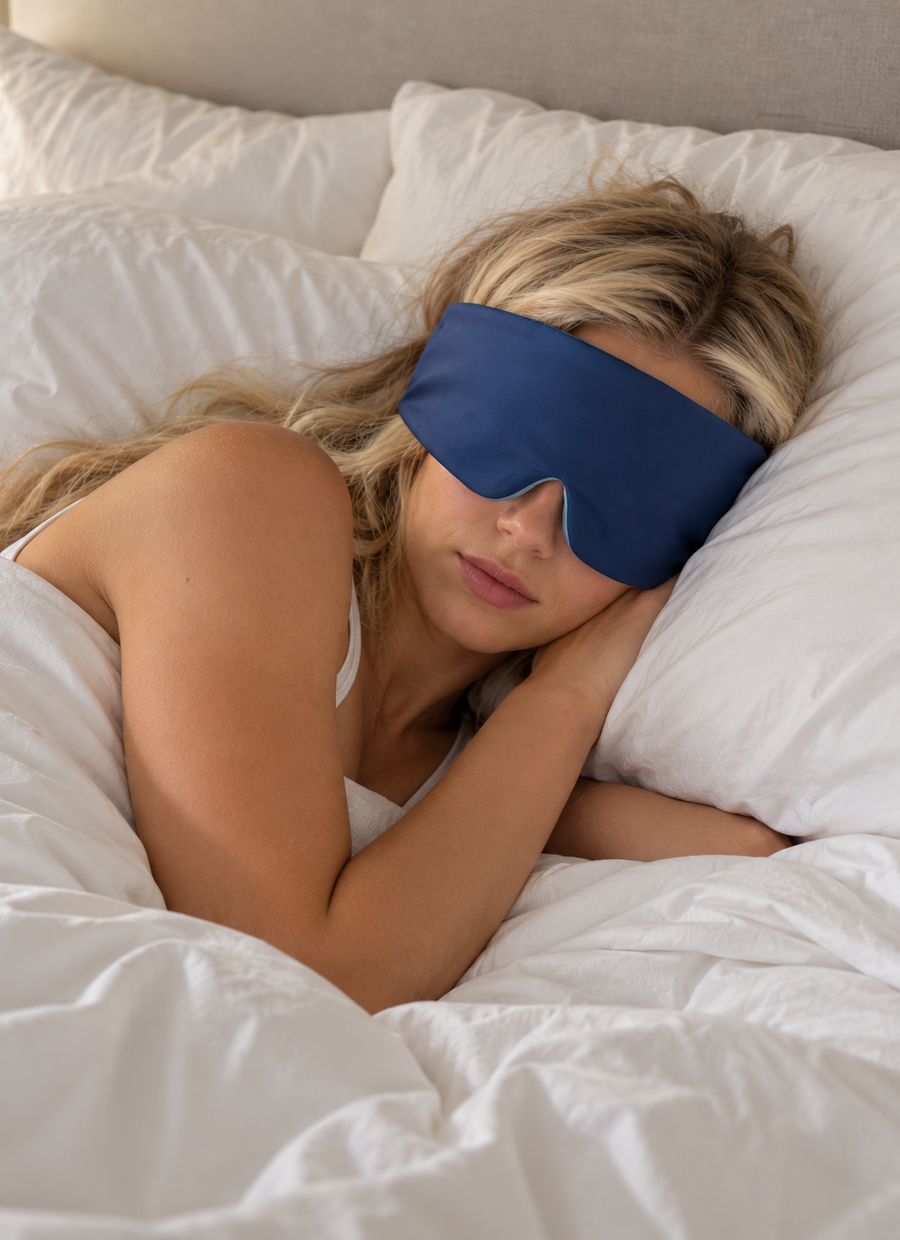
Think of your bedroom as a recovery room. Keep it cool, cut out noise, and make it as dark as possible. A sleep mask that blocks light completely is the easiest way to get real darkness anywhere, including hotels and team travel.
3. Wind down after late training
Evening sessions can leave you wired. Give yourself 30 to 60 minutes to come down: a warm shower, light stretching, dim lights and no intense screens.
4. Watch caffeine timing
Caffeine can stay in your system for hours. Try to have your last coffee or pre-workout early in the day, especially before an important night of sleep.
5. Don't underestimate naps
A short nap of 20 to 30 minutes can boost alertness without leaving you groggy. Keep naps earlier in the afternoon so they don't eat into your night.
6. Protect sleep on the road
Travel is where sleep falls apart: new beds, bright hotel rooms, early flights and time zones. Pack the basics that make any room feel like home: a sleep mask, earplugs or a mask that covers your ears, and a consistent bedtime routine.
Built for recovery
We designed The Lune Mask 3.0 to be the piece of recovery gear you'll never want to travel without. It blocks up to 99.8% of light, wraps over your ears to soften noise, and stays put all night so you can focus on the one thing that matters: getting better while you sleep.
Train hard. Sleep harder.